
The AI Infrastructure Revolution: Predictions for 2026
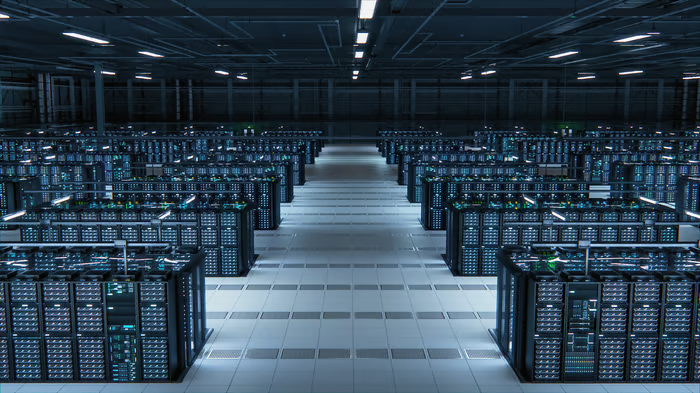
Looking ahead to major developments in AI infrastructure, the data center industry must prioritize power, cooling, and outage prevention.
If you had to identify the single most disruptive force in the data center industry today, AI would be a good choice. The drive to build and operate so-called AI data centers – and to host AI workloads in data centers not specifically designed for AI – is driving all manner of change.
But what, exactly, does that change entail? To what extent has the AI revolution already played out in the data center industry, and what remains to come?
To answer those questions, here's a look at key developments in the realm of AI and data centers from the past year, as well as AI-related trends to watch in the coming one.
How AI impacted data centers in 2025
Let's begin by taking stock of which changes AI drove in the data center world over the past year.
A growing power crisis
Supplying data centers with adequate electricity was challenging before the advent of modern AI technology. But AI has made the issue much worse, to the extent that data centers have begun facing issues like severe delays in connecting to power grids. Some are bypassing the grid altogether by opting for their own power sources – a much more expensive approach, but one that may become increasingly common as AI workloads suck up even more power.
Agentic AI doubles down on demand for AI data centers
If 2023 and 2024 were defined by widespread adoption of generative AI technology, 2025 has been the year of agentic AI – meaning the use of AI-powered software programs that can carry out actions autonomously.
From the perspective of data center hosting, agentic AI workloads are not fundamentally different from generative AI workloads. Both types of AI are based on LLMs – the power-hungry AI models that businesses often deploy using specialized hardware, like GPUs.
Still, the rise of agentic AI has underscored how LLMs – and data centers capable of hosting them – are not likely to be a passing trend. On the contrary, it is likely to spawn even more demand for data center capacity.
Major data center outages
No year goes by without a major IT outage. But 2025 has been notable as a year where two very large service and infrastructure providers – AWS and Cloudflare – both experienced major outage events.
These outages impacted the availability of AI services, like ChatGPT, a reminder of how the AI applications that we now take for granted are only as reliable as the data centers and networking infrastructure that power them.
It's hard to say whether this was simply bad luck, or the result of a trend toward increased data center outage risks. Either way, it's a reminder that investing in infrastructure resilience is always a good move.
AI Data Center Trends to Watch in 2026
Expect AI-related trends, such as the following, to continue transforming the data center industry in 2026.
Acceleration of liquid cooling adoption
In addition to consuming lots of power, AI workloads generate a lot of heat, which is why one AI trend that may play out over the coming year is growing adoption of liquid cooling systems. Not only are these systems more efficient, but they may also be the only way to cool AI servers that run so hot that conventional cooling methods can't keep up.
Increased regulations on AI infrastructure
To date, much has been said about AI regulation, but relatively little has been done, especially outside of the European Union, one of the few large jurisdictions to pursue meaningful AI compliance mandates.
But that may well change in 2026. In pursuit of goals such as sustainability, the protection of critical AI services against cyberattack and the safeguarding of privacy, regulators may impose new requirements related to AI workloads and the infrastructure that hosts them. Such changes may not change the rate at which the industry can roll out AI data centers, but they're still likely to affect the operations of data centers that host AI workloads.
Growing edge AI deployment
No matter how powerful and scalable your data center is, the fact remains that moving data over the network from a data center to end-users can be slow – which is why edge AI infrastructure may become increasingly trendy in 2026. By placing AI workloads physically closer to users, edge AI can mitigate network latency delays and boost performance – a particularly critical consideration for AI use cases that require real-time responsiveness.
Preparing data centers for quantum-AI convergence
The jury's still out on whether, and how soon, quantum computing will become practical enough for real-world use. But 2025 saw some major advancements in this realm, such as Google's claim in October that it has produced a quantum chip capable of performing 13,000 faster than conventional machines.
Data center operators who believe that quantum practicality is fast-approaching might respond to developments like these by investing in quantum-ready infrastructure. If quantum computers become reliable enough for real-world use, they're likely to become key to deploying a whole new generation of AI workloads – so data centers prepared for quantum will be at the forefront of both the AI and (if it happens) quantum revolutions.
More on-site power
A final data center trend to watch in 2026 – and one that reflects the energy-hungry nature of AI – is increased investment in on-site power sources for data centers. These serve two purposes:
First, they eliminate or reduce dependence on grid power, helping to ensure that AI workloads, in particular, have enough energy even if the grid doesn't. Additionally, they offer a backup power solution to mitigate the risk of outages caused by grid failures.
Both of these are key considerations in an age where meeting the demands of AI and data center resilience are top goals.